Specimen Receiving Feature
Pathagility has launched a new feature to integrate the specimen receiving process into the lab’s LIS workflow. Receiving in Workpath allows your samples to…

Pathagility has launched a new feature to integrate the specimen receiving process into the lab’s LIS workflow. Receiving in Workpath allows your samples to…

How many times have you heard this mantra in the past few months: “the patient is now at the center of our business model.”…

Pathagility’s LIMS and reporting solution provides lab executives with a central laboratory reporting solution that will adapt across any type of test, device or laboratory…

As a laboratory executive, you are in charge of ensuring your lab operations including lab staffing, testing, and reporting run smoothly and deliver the…

It’s impossible to read healthcare news or articles or event attend a health-focused event without hearing the words “patient-centered care” or “patient experience”. In…
As a healthcare professional, you certainly understand the importance of annual and semi–annual physicals and doctor visits. By scheduling these regular visits and check…

Greg Ingle’s background is eclectic to say the least. Greg was a host in the 90’s for various radio stations and was a nightclub DJ…
Medical laboratory managers and technicians play an important role in the prevention and diagnosis of diseases of all kinds. These lab techs are irreplaceable…

Evaluating a LIMS and reporting solution can be overwhelming. Not only does your lab’s reporting affect the quality of your own lab and processes,…
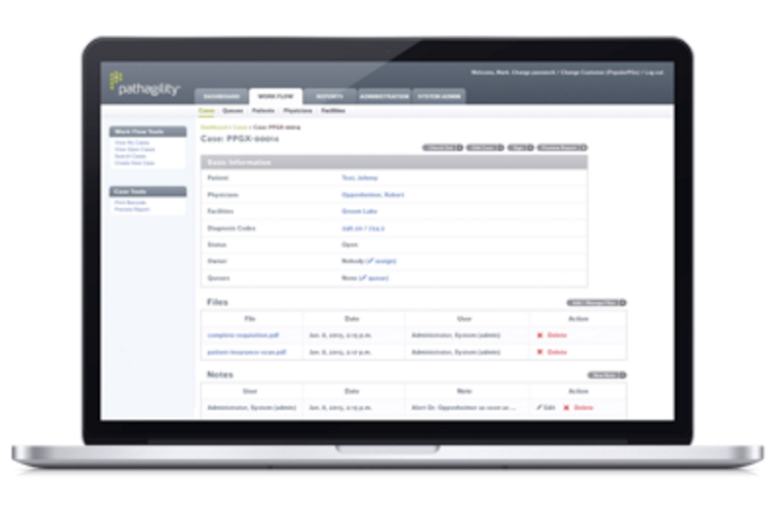
The Pathagility team is inspired by start-up labs and existing laboratories that are developing new and innovative tests. We know how challenging that process can…
Micaela Vargas’ Credentials Micaela Vargas (Micki) has a PhD in cell and molecular biology. Part of her work as a Doctoral student at the University…
Across the nation, labs are facing the toughest financial squeeze of recent times. Simply said, lab managers are being asked to cut operating costs and…
A high volume clinical laboratory based in Louisiana specializes in advanced PGx and Toxicology testing. The lab receives test samples from around the United States…
Over the last 10 years, it has come to public knowledge that genes do not necessarily have to express themselves. Integrative doctors have brought…
More than five years ago, in a “Lab of the Future” supplement for Advantage Business Media, more than half (55%) of the respondents to a…
You know just about everything there is to know about your lab. You understand the technology you use and how it works, you know each…
According to a recent article on AACC, each year, approximately 4 million patients experience some kind of overdose or chemical reaction to a substance –…
When the human genetic code was cracked over a decade ago, it brought with it the expectation that there would be immediate application to human…
If the past few years have been any indicator, healthcare in 2016 (and maybe especially in the lab) will be fraught with change and will…
As a lab executive, we don’t need to tell you how much the lab has changed over the last years. Every day, more and more…
Spring is naturally a time to freshen up and start new things. In that spirit, we are launching a fresh, new pathagility.com! Our team is inspired by…
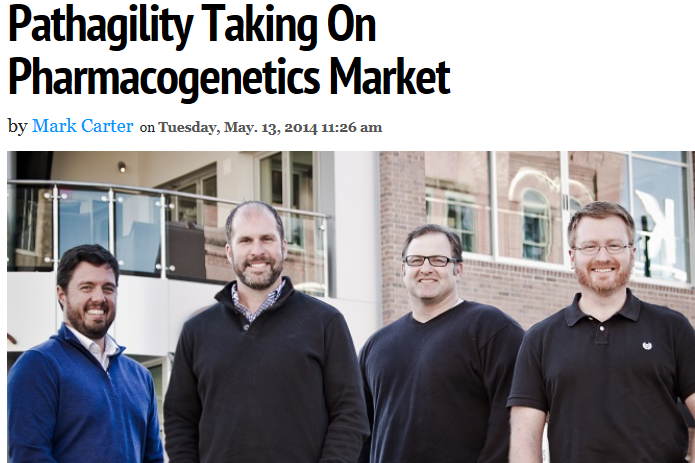
Over the past few weeks, Pathagility has been a part of several written pieces on the Pharmacogenetic (PGx) testing market. We appreciate this coverage and continue…
You’ve probably read by now that both the House and the Senate have passed the Medicare sustainable growth rate (SGR) bill. The official name of…
The latest version of WorkPath (4.2.0) is now in production. This release includes the following features and enhancements: Batch Printing – Users can now select…
The latest version of WorkPath (4.0.1) is now in production. This release includes the following features and enhancements: Queues – The queuing system is now…
The Pathagility team has been hard at work to keep up with the demands of clinician’s and labs. Improvements in speed, user experience and new…
Your lab is growing and the demand on your staff to print reports and fax is taking up more of their time. You don’t want…
How long does it take to launch a pathology lab business and start generating reports? 6 months? 3 months? How about 1 week?!? That’s how long…
The text book answer: the ability of a system to handle a growing amount of work in a capable manner. The real world answer: the…
Is your pathology lab executing a growth strategy? Have you hired a sales person or team to grow your specimen count? We talk to pathology…
Today’s fast paced world requires information be available instantly and on-demand. This has never been more true than it is right now in the pathology…
Wow! 2011 was a great year for Pathagility with the addition of some great new clients and some exciting projects with our existing customer base. We’ve…
Pathagility will have a booth at CAP ’11 next month. Hopefully the Dallas weather in September will be a tad bit milder than August (and…
We were pleased to welcome Pathology Associates (Lufkin, TX) as a new Pathagility client earlier this month, and we are also pleased to report that the migration from…
If you are a pathology group or laboratory, how do your referring physicians want to receive report information? Fax? Web Portal? EMR interface?The answer is something…
We are pleased to be one of the vendors to participate in the April 2011 CAP Today article called “Lab-link vendors – on a mission with ‘mobile’…
We received a call from one of our lab customers requesting a results only interface for one of their referring physicians. The referring physician has…
In the March issue of CAP Today, Karen L. Wagner did an article on the changing middleware landscape called Middleware to “littleware”: vendors catering to…
Last week I attended a formal, non-Pathagility related event where we were seated randomly with individuals with varying backgrounds. Among the group at my table was an investment broker, a restaurant chain owner,…
Fantastic weather welcomed pathologists from all over the world to San Antonio for the 100th annual USCAP meeting this week. Posters and abstracts by thought…
In a couple of weeks, Pathagility is going to attend the USCAP 2011 Annual Meeting in San Antonio, TX. Are you? Whether you are associated…
According to new research from Kalorama Information, the laboratory information systems (LIS) market should grow 6% annually over the next few years from its 2010 level…
Why would community pathology groups choose a SaaS product over a traditional software package?? 1. TCO When doing a cost comparison between software products, one should…
The healthcare IT arena is extremely chaotic. The systems that support this industry in most cases mirror this complicated environment. The physicians, hospitals and healthcare organizations that are…
Many pathology labs we talk with have purchased, developed and deployed FileMaker Pro database lab systems. This seems even more true in smaller independent and hospital labs…
For Christmas, Santa brought me an iPad (which I thought was very cool by the way!) I’ve been living vicariously through friends and business associates who…
Normally we stay away from posts that are this Pathagility product focused, but every once in a while we just can’t help ourselves! We are proud of our ReportPath product/service and…
More than 140,000 industry professionals attended the CES11 in Las Vegas last week. Following up on our post Top gadgets at CES 2011 and impact on…
Check out this Newsbyte in the latest issue of CAP Today by Dr. Raymond Aller entitled, Interface workarounds offer fixes for common issues. In it, Dr.…
Tomorrow marks the beginning of the Computer Electronics Show (CES) 2011 in Las Vegas. For those that are not techno geeks or gadget happy, this is one…
Happy New Year! Check out this great presentation by Dr. Bruce Friedman called Integrated Diagnostics: The perspective of the pathologist. In it, Dr. Friedman defines…
Should Pathologists Meet with Patients? It’s an interesting question. If you haven’t already, read this CAP Today article by Karen Titus about Melinda Lewis, MD…
How important is a Pathologist to Pathology Software? Certainly, we ask this question with a big smile on our faces because one of our Founders…
In such a short time, social media has become a part of our lives. This morning, I saw Biz Stone on The Today Show discussing “2010’s Most Inflential Tweets.” …
Pathagility levels the playing field by giving you the same functionality as the national mega labs. OrderPath delivers referring physicians a simple web-based order entry…
It can take many months and thousands of dollars to get a results only interface or bi-directional interface to “go live” from a lab system…
In the recent CAP TODAY, there is a good article in the Newsbytes section called, The conundrum of shortcut keys for Web-based LIS. Being a…
Ever wonder why one EMR vendor charges $10+K and takes 1 year to implement a Lab-to-EMR interface and another EMR vendor charges $3K and takes…
On behalf of the team at Pathagility we would like to congratulate our Employee of the Month Michael Heckman for going above and beyond to…
What is the culture of your organization, and what does it say about your practice? Corporate culture defines how your organization acts, thinks, and feels. …
Cost is always at the top of referring physicians’ list when adopting an EMR solution, and there is no shortage of pricing and package options…
If you were to poll pathology labs and ask what the most important factor in competing for referring physicians’ cases, you would get a multitude…
If you are a pathology group or any healthcare provider group for that matter, how would you rate the effectiveness of your software vendor on…
As a follow up to our recent post, Social Media in Pathology – Game Changer, check out this recent article from CAP Today entitled Social…
As mentioned in our recent post, Meaningful Use and Pathology Labs, we stated we would start forwarding on information regarding the affects of Meaningful Use…
It is no secret that pathology groups are fielding calls from their referring physicians, hospitals, and healthcare partners to build EMR interfaces. Check out our previous post…
Terminology– it is interesting how perceptions are formed based on a particular set of words even if those words are the only real differentiators of something. Word…
Came across this editorial from the Archives of Pathology & Laboratory Medicine by … yes…scrolling through Twitter and seeing a Tweet from @VTPathology. The editorial…
CAP is offering a course to pathologists that are interested in learning about the impacts of recent federal policies on clinical laboratories – The Clinical…
We are pleased to announce that Bakersfield Pathology Medical Group is utilizing Pathagility‘s ReportPath product with its AP Easy Lab System. ReportPath is providing BPMG a secure,…
In August, Digital Imaging and Communication in Medicine (DICOM) Standard Supplement 145 (aka – Whole Slide Microscopic Images) was passed. This standard aims to allow pathologists to…
There appears to be a national trend of physicians moving away from private practice and into salaried positions at large health systems. What role does…
Came across this CAP Today Newsbyte that provides some detail on HL7 standards that will be part of the federal government’s final rule on standards and…
You don’t have to look very far to find information, blog posts, tweets, etc. on EHR/EMR Meaningful Use (MU). It seems a bit more difficult to find information…
Are you a pathologist, lab tech, clinician or a manager at a laboratory? If so, what is your lab’s biggest differentiator? If we took a poll you…
In a recent post, we talked about the acquisition of BioImagene by Ventana Medical Systems, Inc. (a member of Roche Group). BioImagene is a leader in…
With the increase in EMR adoption, we’ve discussed in previous posts the importance of the pathology lab and the huge wave of LIS-to-EMR interfacing that…
I’m a big fan of the folks at Dark Daily and got…hmmm how should I phrase this…FIRED UP when I read their most recent article called Sales…
In working with pathology labs for the last several years, one common theme we hear related to their system environments is that work-arounds are a reality. They continually…
I came across a great blog called Cloud Computing’s Stormy Future this morning by John Hagel III and John Seely Brown. John and John are co-chairmen of…
In a previous post, we talked about one way a pathology lab can protect its brand – the lab report. For a quick refresher, compare…
At least 70% of data in the EMR originates in the lab. Several sources can be sited with this interesting statistic. We see articles, blog posts,…
The article Good News for Anatomic Pathology Laboratories: Tissue-Based Diagnostics Market Predicted to Double by 2016 published this morning by Dark Daily, is another indicator that the…
A couple of weeks ago, it was announced that Ventana Medical Systems, Inc. (a member of the Roche Group) would acquire BioImagene for $100+ Million. BioImagene is…
Even though the movement of health data is becoming more digitized and shared electronically, one of the main distribution channels for lab results is still…
We discussed “partnering with your competition” in a post a few months ago and thought it made sense to follow up on the topic after…
FileMaker Pro is an easy to use, flexible database tool that is quite popular in the pathology laboratory world. Many database applications (laboratory information systems…
Came across this post and video about how HL7 works on Twitter by @HL7 and really enjoyed the simplicity of it. What’s interesting though is that HL7…
There is an abundance of focus and energy around the shift to digitizing healthcare. The government may be the biggest cheerleader and/or bank roller. Last week,…
Software pricing – what an interesting science! So much goes into strategically positioning your software product, platform and/or service in the particular market you are…
Pathagility won a contract with UNC Nephropathology about 18 months ago. We were chosen because we offered a web-based reporting solution that did not require…
Several years ago I worked for a national lab. Our company’s individual AP labs of different sizes and specialties were sprinkled from coast to coast. …
Today almost every pathology lab director has “interfacing” as a line item on their weekly staff meeting agenda. As more referring physicians implement EMR systems…
We’ve already discussed the benefits of SaaS in healthcare especially those applications that provide opportunity for customization. But are all SaaS platforms equal? No…you guessed it……
The Software-as-a-Service (SaaS) model has been in existence for many years and continues to successfully prove out its value proposition compared to traditional legacy software…
Just about every information source these days points to increased demands on the healthcare IT industry. Many are hoping process efficiencies can be realized by further automating healthcare. Others…
What does your lab’s report say about the quality or value of your service? Your lab’s reports are an opportunity to create a memorable experience…
Pathagility had the opportunity this week to speak to a group of Arkansas business leaders from both the public and private sectors at the Innovate…
Pathagility was in New Orleans last week for The Dark Report’s Executive War College on Laboratory and Pathology Management. Robert Michel, Editor in Chief of…
ARRA (American Recovery and Reinvestment Act of 2009) has $17,000,000,000 allocated to physicians to encourage the adoption of EMR technologies. In order to be eligible…
Challenges and questions still remain as we enter the new era of Healthcare IT. The fit of practices and vendors depends largely on the willingness…
While it seems that most healthcare providers are hoping to get to the stage where health information systems (EMR/EHR, LIS, RIS, etc.) provide more workflow…
We are looking forward to attending the 15th Annual Executive War College on Laboratory and Pathology Management in New Orleans – April 27-28th. The agenda…
As the adoption of electronic health records (EHR) continues to increase, so does the need to connect lab systems to EMR software. Interfaces are usually…
Check out this case study on Pathagility becoming University of North Carolina (UNC) Nephropathology’s digital interface to their physician clients. UNC was able to enhance their…
In today’s anatomic pathology market how do you as a local or hospital based pathologist hold on to or grow your business? You’ve seen large…
WorkPath is a flexible, web-based platform that supports the creation of customized laboratory workflows. Some labs need to move from an inflexible, “one size fits…
Communication and collaboration is at the heart of Pathagility’s next-generation web-portal. In an increasingly collaborative healthcare environment, the need to seamlessly share data, insights, and…
Being able to leverage existing system investments is of paramount importance to many pathology labs due to the significant, sunk costs that they have already…
The majority (varying reports of between 60-80%) of all quantifiable data utilized by medical professionals to make health related decisions originate in the lab. While…
What is the true cost of laboratory information systems (LIS) that support pathology? When calculating, there are items that seem quite obvious and others that…